
Criterion B: Investigating patterns
Criterion B at a glance
- Criterion B in MYP Mathematics is investigating patterns: students collect information that forms a number pattern, then describe it as a general rule using words and algebra.
- It's a stand-alone investigation that builds on itself, not a series of unrelated problems. For students new to the MYP, it's often the most unfamiliar type of assessment.
- Students are assessed on three strands: select and apply strategies to collect information, describe the pattern as a general rule, and verify (and from Grade 7, justify) that rule.
- The best preparation is being comfortable with the concepts from class, and coming ready to think.
Prefer to watch? This article is a written version of Episode 2 of The Criteria Series (5:23).
What is Criterion B in MYP Mathematics?
For students who are new to the MYP, Criterion B is one of the most unfamiliar types of assessment, and often the hardest to grasp. It doesn't look like a normal test. Some teachers (myself included) even say you can't really study for it.
In primary school, students understand patterns based on shapes, colours and sometimes numbers. In the MYP, students need to collect information that forms a number pattern, and then describe that pattern using words and algebra. The skills they build doing this are essential for identifying relationships, both inside and outside of math.
Criterion B opportunities appear across all four branches of MYP Mathematics. Here's a glimpse of the kind of pattern students might investigate in each one:
(x+2)² = x² + 4x + 4
(x+3)² = x² + 6x + 9
(x+4)² = x² + 8x + 16
 Numerical and abstract reasoning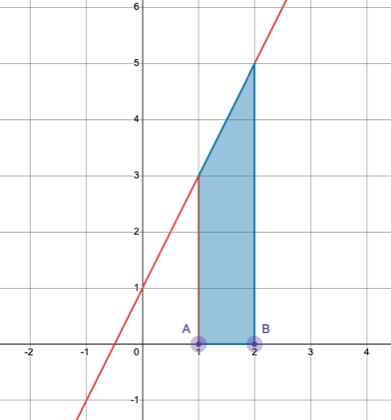
 Thinking with models
 Reasoning with data
You'll see Criterion B assessments throughout the year, but teachers also build these skills into everyday lessons. Through inquiry, students collect information to explore a relationship and then generalize it as a formula. Sometimes that formula turns out to be the same one in their formula booklet that they use on a Criterion A assessment.
What does a Criterion B assessment look like?
Criterion B tasks usually start with a visual prompt or a mathematical situation. From there, students work through three steps:
- i
Investigate to find a pattern
Apply a strategy from class to collect information that follows a pattern. - ii
Describe it as a general rule
Describe the relationship in words, and then using algebra. - iii
Verify (and sometimes justify)
Check the rule works with an example. From Grade 7, also show it will always work.
Criterion B tasks often come in two parts: a simple pattern in Part A and a more complex one in Part B. Let's look at the example from the video, with a student's responses filled in. Open each part to see it.
Example task
Investigating a Growing Rectangle
- Adapted from
- The Growing Staircase, an MYP Math Tutor investigation
- Branch
- Spatial reasoning
- Topics
- Perimeter and area, patterns, algebraic expressions
Perimeter of the rectangles. A designer is building a pattern from identical square tiles. Each side of a tile is 1 unit. Shape 1 is shown below.
Write down the perimeter of Shape 1.
A new row and column of tiles are added to form Shape 2. Write down the perimeter of Shape 2.
Write down the perimeter of Shape 3.
Record your answers to questions 1–3 in the table. Then predict the perimeter of Shapes 4 and 5.
| Shape # | Perimeter |
|---|---|
| 1 | 6 |
| 2 | 10 |
| 3 | 14 |
| 4 | 18 |
| 5 | 22 |
Describe any patterns you see in the table.
Every time we go to the next shape, the perimeter goes up by 4.
Growing patternThis is the pattern down the table. It helps students check that their information is correct.
| Shape # | Perimeter |
|---|---|
| 1 | 6 |
| 2 | 10 |
| 3 | 14 |
| 4 | 18 |
| 5 | 22 |
Describe the relationship between the shape number (n) and the perimeter (P) as a general rule.
The relationship goes across the table, from shape number to perimeter. It works for every row, so it can predict any shape without extending the table.
| Shape # | Perimeter | |
|---|---|---|
| 1 | × 4 + 2 | 6 |
| 2 | × 4 + 2 | 10 |
| 3 | × 4 + 2 | 14 |
| n | × 4 + 2 | 4n + 2 |
Verify that your rule works with an example from the table.
When n = 3, the table shows P = 14.
Investigate the area of the rectangles as they grow.
- Label the side lengths of the rectangles.
- Find the area of the rectangles, drawing more rectangles as necessary. Organize your findings in a table.
- Describe a general rule, and verify it.
How is Criterion B assessed?
Teachers look for three strands. Each one matches a step in the investigation, from collecting the information to proving the rule works.
A general rule is more powerful than a growing pattern. It lets students make predictions without extending the table or writing out every term.

| Criterion B strand | In plain language |
|---|---|
| i.Select and apply appropriate mathematical strategies to discover simple and complex patterns | Choose an appropriate method to collect information that follows a pattern. |
| ii.Describe patterns as general rules, consistent with findings | Describe the relationship across the table, using words and eventually algebra. |
| iii.Prove, or verify, and justify general rules | Verify: check that your rule works with an example from the table. Justify: show that your rule will always work. |
Strand wording: © IB, MYP Mathematics Guide, 2020.
What's the difference between verify and justify?
From Grade 7 (MYP 2) onward, after students verify their rule, they also need to justify it.
Verify
Shows the rule works for some examples. Students substitute values they've already worked out and show the rule gives the same result. On its own, this isn't convincing enough.
Justify
Shows the rule works for any number. Younger students usually explain in words, referring to the diagram. Older students use algebra.
Each new shape is one unit taller and one unit wider than the last. Being taller adds 1 unit to each side (that's 2), and being wider adds 1 unit to the top and bottom (2 more). So the perimeter always goes up by 4.
Even though several new tiles are added each time, only 4 new units are added to the perimeter. That's where the 4n comes from, and the + 2 makes the rule match Shape 1.
Shape 3: P = 10 + 4 = 14
Older students show the rule is always true without substituting values. Shape n is n units tall and n + 1 units wide, so:
Understanding the achievement levels
The achievement levels follow a similar structure across all grades:
-
1–2
Level 1–2
- Collects information that follows a simple pattern, with teacher support
- Attempts to identify a rule (for example, a growing pattern)
-
3–4
Level 3–4
- Collects information that follows a simple pattern (for example, a well-scaffolded Part A)
- Identifies a general rule, in words and/or algebra, for this simple pattern
-
5–6
Level 5–6
- Collects information that follows a complex pattern (for example, a more open-ended Part B with a more challenging rule)
- Identifies a general rule that is consistent with their pattern
- Verifies that the rule works
-
7–8
Level 7–8
- Collects information that follows a complex pattern
- Identifies a general rule that is consistent with their pattern
- Verifies and justifies that the rule works
Note: In Grade 6 (MYP 1), expectations are generally less rigorous, and can vary by school.
Based on the criteria, the teacher identifies how successful the student was in each band, using evidence from their work, and assigns an appropriate achievement level. This often points to clear next steps for the student.
What might different achievement levels mean? For example:
Level 3
The student collected information somewhat correctly, but couldn't find a rule (a growing pattern or relationship), perhaps because some information wasn't collected correctly.
Level 5
The student collected information and found a general rule for both the simple and complex patterns, but didn't quite verify it correctly yet.
Level 7
The student found and verified general rules for both patterns. They attempted to justify the rule, but the justification wasn't quite convincing yet.
Why is Criterion B important?
It unlocks formulas
Understanding and generalizing patterns with algebra lets students discover the formulas they'll use for problem-solving, instead of only memorizing them.
It supports Criterion A
Spotting relationships and generalizing them helps students approach unfamiliar Criterion A (Level 7–8) problems with more ease.
It builds thinking habits
More broadly, it develops the creative and critical thinking and problem-solving habits students need beyond mathematics.
How can students prepare for a Criterion B assessment?

Be comfortable with the concepts from class
Criterion B draws on content knowledge. The stronger the foundation, the easier it is to collect information correctly and notice a pattern.

Practise guided Criterion B tasks
Guided tasks in class, or formative tasks at home, make the process familiar, so it doesn't feel unfamiliar when it's time to do it independently.

Come ready to think
The day before, get a good sleep and eat a good breakfast. A rested brain handles the thinking more easily.
What is Criterion B?
- Investigating patterns
- Collect information, find a general rule, then verify and justify it
How is it different?
- A stand-alone investigation, not a normal test
- New for many students starting the MYP
Why is it important?
- Builds the skills to spot relationships and generalize them, in math and beyond
Criterion B: frequently asked questions
Can students study for a Criterion B assessment?
Not in the usual way, since there is no list of facts to memorize. The best preparation is being comfortable with the concepts covered in class, because Criterion B draws on that content to collect information correctly. Practising guided Criterion B tasks in class, or formative ones at home, also makes the process feel familiar before an independent assessment.
What is the difference between verifying and justifying a rule?
Verifying checks that the rule works for an example: students substitute a value from their table into the rule and show it gives the same result. Justifying shows that the rule will always work, for any number. Younger students usually justify in words by referring to the diagram, and older students use algebra.
Does my child need to use algebra for the general rule?
Students often start by describing the rule in words, and that is a good first step. The goal is to also write it using algebra, for example P = 4n + 2, and algebra becomes more important at the higher achievement levels and in older grades.
What should students do if their table doesn't seem to follow a pattern?
Go back and check the information they collected. The pattern down the table is a self-check: if it isn't clear what comes next, there is often a small mistake in one of the earlier answers.
How is Criterion B different from Criterion A?
Criterion A is a test made up of separate problems that students solve using strategies they have learned. Criterion B is one investigation that builds on itself: students collect information, describe the pattern they find as a general rule, and then verify and justify that rule. Read more about Criterion A
Read the video transcript
Hi, I'm Shannon from MYP Math Tutor. We've put together a series of videos that explains the MYP Mathematics criteria: what they are, what they look like and how they are assessed. Next up, what is this Criterion B business?
It's a fairly unfamiliar type of assessment for students who are new to the MYP. Students are probably used to a normal test format, and this is not it. Some teachers, myself included, even say that you can't really study for a Criterion B task, but the skills students develop practising this type of task are essential to identifying relationships within and outside of math. So let's get into it.
Criterion B is investigating patterns. There are Criterion B opportunities that appear across all topics, whether it's related to number and algebra, functions, geometry, or probability and statistics. We certainly see Criterion B assessments throughout the year, but it's also really common for teachers to integrate them into their lesson planning using the inquiry-based model of learning, as students collect information to explore a relationship and then generalize that relationship using a formula. Sometimes that formula happens to be the one in their formula booklet that they might use on a Criterion A assessment. This is a different way of learning, but a really nice one for students to recognize and explore as they start the MYP.
So how do we assess Criterion B? There are three strands that we're looking for. Strand one is to select and apply mathematical strategies to collect information that follows some kind of pattern. Strand two is to describe these patterns as general rules, not just growing patterns. A rule will allow students to make predictions without needing to extend the table or write down consecutive terms. Strand three is to verify their rule with an example, or in other words, checking to see that it works. And in Grade 7 and above, students are also asked to justify, or show that their rule always works, in the beginning using words, and later on using a sophisticated algebraic approach.
Let's see what this looks like. Criterion B tasks usually start with a visual prompt or a mathematical situation. Students will need to apply mathematical strategies, often related to what they've been working on in class. By doing this, they will collect information that follows a pattern. For example, if students have been working on perimeter and area, they may need to demonstrate this skill on an assessment task. By adding up the units on each side of this rectangle, they'll find the perimeter and record it in the table. In the next shape, they will do the same thing, adding up all of the sides and recording it in the table.
Eventually, they might spot a growing pattern. This is the pattern down the table that allows you to check to see if you're collecting information correctly. Based on this, could you make a prediction about what comes next? If the answer is yes, then you're probably on the right track. A common hiccup that happens here is that the information is not correctly collected. Maybe it doesn't follow a clear pattern and the student is working really hard to try to figure out what comes next. My best piece of advice at this stage is to go back and check your work. Maybe you missed something or made a mistake.
Next is a little bit more tricky. Students need to identify a relationship, which I like to think of as the pattern or rule that goes across the table rather than down it. It would allow you to make predictions without having to continue your table for several rows. The trick is to try to figure out a rule that works for every single row. Once you've got it, you might describe it using words, and then the goal is to describe it using algebra.
Finally, students will verify and sometimes justify their rule to see if it works. For verification, they should use a value from their table that they collected and sub it into their rule to make sure it checks out. For justification, students can explain by referring to the diagram why their rule should work. In this case, even though we are adding several more blocks with each new rectangle, we are only adding four new units to the perimeter each time. Other examples might require an algebraic proof of sorts.
In some Criterion Bs, there's a second part that acts like an extension. There's a more complex rule, and usually the instructions are less scaffolded or guided. The instructions will simply be a few bullet points, but the expectation is to go through all the same steps that you did in the first part. So you can even use your work in the first part as a little guide.
So how can students actually prepare for a Criterion B assessment? Honestly, the best preparation is just being comfortable with the concepts that are covered in class. Criterion B draws on content knowledge, so the stronger the foundation is, the easier it is to collect information correctly in order to notice a pattern. Beyond that, practising guided Criterion Bs during class time or completing formative Criterion Bs outside of class really helps students get familiar with the process, so it doesn't feel unfamiliar when it's time to do it independently. My personal advice for students the day before a Criterion B is to come ready to think. Get a good sleep, eat a good breakfast, and your brain will handle the thinking more easily.
So to summarize, Criterion B is about investigating patterns. The process for these tasks is to collect information, find a general rule, and then verify and justify that rule. And how do we prepare? Become more comfortable with the concepts in class and come to school ready to think.
To close, we'd love to share a little bit more about who we are. Here at MYP Math Tutor, we're thrilled to be able to support over 150 students from more than 75 IB schools spanning over 40 countries worldwide. We work with students who attend some of the top IB schools in the world. We offer personalized support for MYP and DP mathematics through one-to-one virtual sessions. All of our tutors are experienced IB teachers with classroom expertise and a deep passion for IB education. They personalize each session to the students' needs, helping them build confidence, strengthen understanding and improve achievement in mathematics. If you'd like more info about who we are, please reach out to [email protected] or visit our website at www.mypmathtutor.com.

Shannon Mellon
Shannon has 10 years of international teaching experience, including previous roles teaching MYP Mathematics and Science at International School of Hamburg, and MYP and DP Mathematics as Head of Department at Nord Anglia International School in Dublin. Shannon is now a learning specialist for MYP and DP Mathematics at MYP Math Tutor, and also supports the team’s business development.
This work has been developed independently from and is not endorsed by the International Baccalaureate Organization.